As part of our campaign to help healthcare providers understand the importance of recognizing and treating newborn hypoglycemia early, we aim to raise awareness among hospitals (and birthing centers, and home birth midwife practices) about the benefits of timely HI diagnosis and the profound consequences of delayed diagnosis through a voluntary letter-writing campaign to the hospital where a child or adult with HI was born.
Many hospitals and birthing professionals may never learn that a baby born in their care was later diagnosed with HI, or that delayed diagnosis may have had lifelong consequences. By sharing their experiences respectfully, families can help close that knowledge gap and encourage improvements in newborn hypoglycemia screening, follow-up, and care.
This initiative also gives healthcare providers valuable insight into the real-life outcomes of babies initially treated under their care. These family recollections can provide powerful context for how early—or delayed—intervention affects newborn health, while also helping to spark broader awareness of HI and the importance of early recognition.
About the campaign and how to participate
Parents and caregivers are invited to personalize and send carefully crafted letters using a CHI-developed letter template to the hospital, birthing center, or birth practice where their child was born. The letters allow families to share whether their child’s hypoglycemia was recognized and treated at birth and, when it was not, what the consequences of delayed diagnosis have been.
The purpose of these letters is not to file a complaint or assign blame. The goal is education, awareness, and prevention: to let birthing professionals know what happened after discharge, emphasize the importance of early identification and treatment of hypoglycemia, and support better outcomes for future babies.
There are four letter templates based on what happened at a birthing facility:
Letter 1: Blood sugar was checked, HI was diagnosed in a timely manner, and the baby was properly managed from that point forward.
Letter 2: Blood sugar was checked at the birthing facility, but the baby was discharged without an HI diagnosis.
Letter 3: Blood sugar was not checked, and no discernible symptoms were present at the birthing facility.
Letter 4: Blood sugar was not checked by the birthing facility, and a parent or family member suspected a problem.
Click the participant information button at the top of this page to read more and access the letter templates.
We have created a letter template via Jotform that will be simple to fill in and personalize to complete the letter. These Jotform fields will be used to generate a personalized PDF letter that can be auto sent via email to the hospital through the Jotform system, or participants can download the PDF and send it on their own. We aim to have at least 300 letters sent before the end of 2026 to as many hospitals as we can around the world.
Country captains and local support
CHI has reached out to prominent HI patient advocates worldwide to invite them to serve as letter-writing campaign country captains. Country captains may help families identify appropriate hospital contacts and may work with HI medical professionals or local advocates to support outreach in their country or region.
Who to send the letter to
Letters may be sent to appropriate professionals at the hospital or birthing facility, such as leaders in newborn nursery care, nursing, pediatrics, neonatology, patient safety, residency training, or hospital administration.
Help finding hospital contacts
CHI and international country captains may be able to help families identify appropriate email addresses for people in these roles, if needed. Sending the letter to more than one appropriate contact increases the chance that the information will be shared internally and promote discussion.
Hospital Education and Follow-up Opportunities
The letters may also lead to opportunities for families, advocates, or medical professionals to speak with hospital teams about HI and the importance of early identification and management of newborn hypoglycemia. If a family or hospital would like additional support, CHI may be able to help arrange an educational presentation by a patient advocate, pediatric endocrinologist, neonatologist, or other professional with HI expertise.
Tracking campaign impact
The Jotform will collect information that participants enter while completing the letter template. These fields will be used to generate a personalized PDF letter for that will be auto-sent to the participant and the recipient. . Participants will also be able to choose whether CHI may contact them seeking permission to use a quote from their letter or about related advocacy opportunities. CHI will create an impact report that will include how many individuals have taken part in the campaign. Impact reports will be de-identified unless explicit consent is received from a participant.
Information collected through the Jotform may help CHI track:
- Number of people who participated in the campaign
- Regions, or countries where letters were sent, the number of letters set by each participant
- Whether participants would like CHI to contact them to seek permission to use a quote from their letter, or other future advocacy opportunities.
Before you participate
If you or anyone in your family is engaged in litigation or considering litigation related to your medical care, your child’s medical care, your child’s HI, or the hospital or birthing facility, please consult with your legal counsel before participating in this campaign.
Project collaboration and support
This project of Congenital Hyperinsulinism International has been developed in consultation and coordination with the Advocacy and Awareness Group of the Collaborative Research Network: The CHI Collaborative Research Network, which includes 62 members and advisors from 17 countries—rare disease advocates, health care professionals, and researchers all committed to improving the lives of people affected by congenital hyperinsulinism. Through research and advocacy, the CRN focuses on timely and accurate diagnosis, evidence-based treatments, standardized clinical guidelines, and improved access to expert care.
This letter-writing campaign is made possible by the LightCure Project of the European Union: LightCure.
To support this effort, the letters include a link to CHI’s advocacy page, which provides information on the needs of people born with congenital hyperinsulinism and steps hospitals can take to support early recognition and appropriate management.
CHI Awareness and Advocacy: A Call to Action – Congenital Hyperinsulinism International
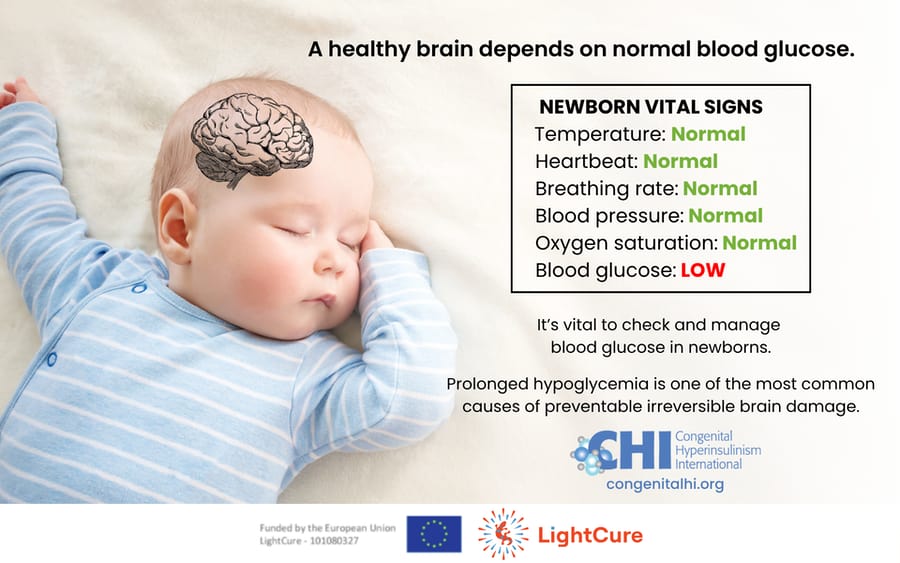
By 2030, CHI’s goal is to end brain damage and death resulting from HI. Achieving this goal begins with early recognition and effective management of hypoglycemia at birth.
Privacy and terms
This campaign collects personal and health-related information through Jotform. Participation is voluntary, and identifying details will not be used in external campaign reporting unless a family explicitly consents to being named. For details on how your information is collected and used, including GDPR information for participants in the EEA and UK, see the Data Privacy Information on the participant page, along with CHI’s Privacy Policy and Terms of Use.
Join the campaign
By sharing your family’s experience, you can help hospitals understand the importance of recognizing and treating hypoglycemia early. Together, we can help prevent brain injury and death caused by delayed diagnosis of congenital hyperinsulinism.