
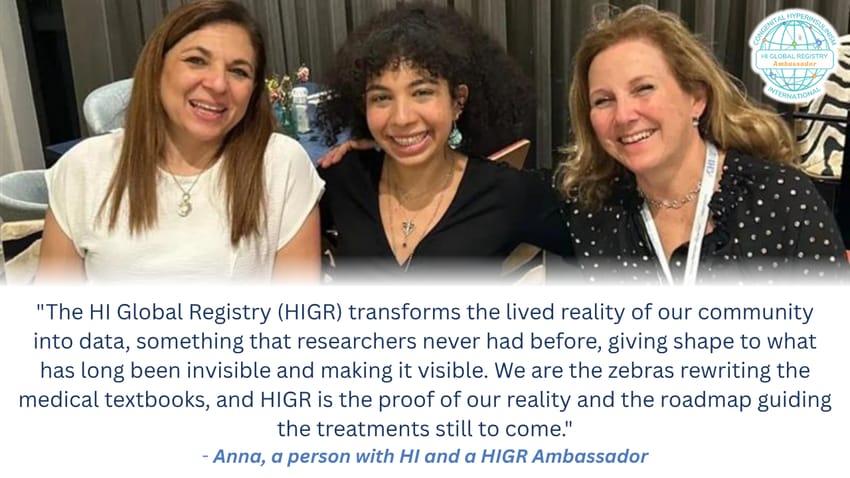
There is a remarkable amount of activity right now focused on understanding what it’s really like to live with congenital hyperinsulinism (HI). Through the HI Global Registry (HIGR) — the patient-powered research project CHI launched in 2018 — we’ve been able to capture the lived experience of HI in a detailed, scientific, and meaningful way. Thanks to the dedication of our patient community, we’ve collected a wealth of information that has already been used in publications, educational materials, and many different research settings.
So, you may be wondering why we are sharing other opportunities for you to participate in quality-of-life studies. Isn’t HIGR sufficient? In science, it is important to have multiple sources of knowledge about the same topic. Each study adds another piece to the puzzle. Together, they build a strong body of evidence about life with HI — your experiences, your challenges, and your expertise. And with the addition of new research projects, we are incredibly grateful for your ongoing involvement. By continuing to share your experiences over time — in HIGR and in our colleagues’ studies — you help create a clearer, more powerful picture for researchers to improve care and develop new treatments.
There are several other research groups, also developing new tools to understand quality of life with HI. I would like to share information about these additional studies with you:
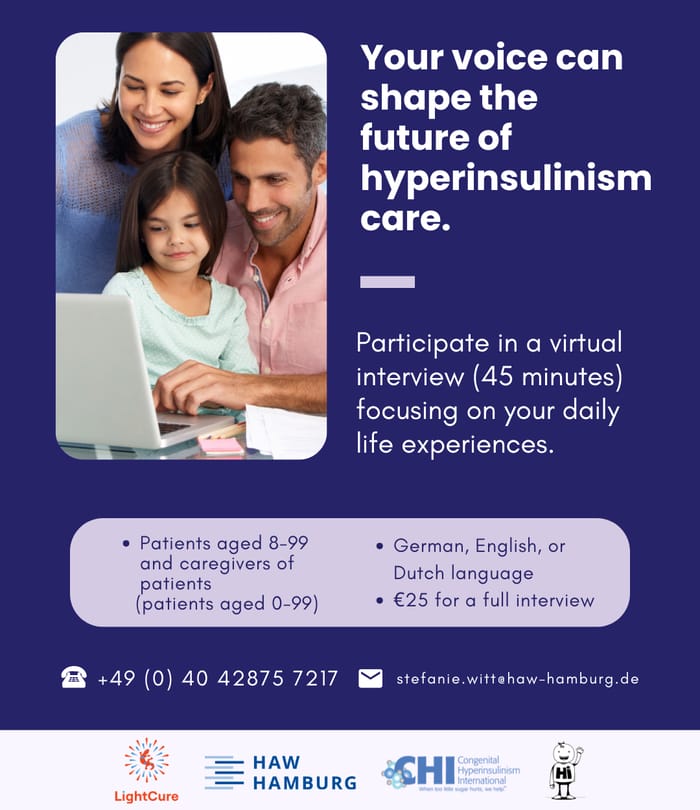
Experts at the Department of Social Work at the University of Applied Sciences in Hamburg (HAW Hamburg). They are one of the partner groups in the LightCure Project working on a concept that light can be used to target and eliminate improperly working pancreatic beta cells. HAW Hamburg, with support from CHI and other country-specific HI organizations, is working on a study to measure the quality-of-life impact of a new treatment compared with the current standard of care. More information about this study is available here.
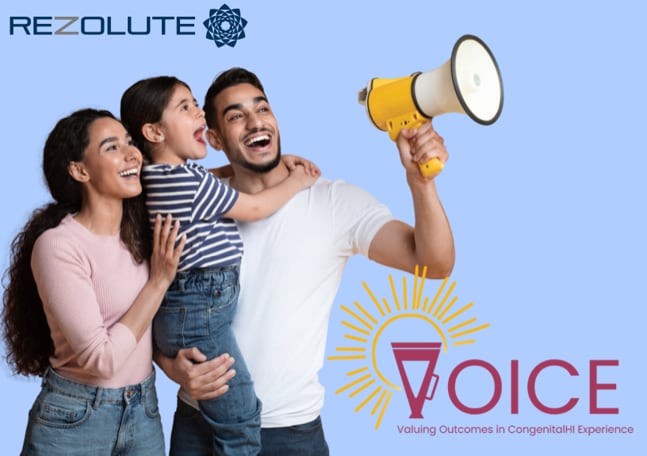
Rezolute Bio, a California biotechnology company, is developing Ersodetug, an insulin receptor modulating antibody treatment for HI. Rezolute’s quality of life research project, the VOICE study, will be used in tandem with their study results to assess benefit of their investigational treatment and as part of Health Technology Assessments in Europe. CHI and some of the country-specific HI organizations are also supporting this project by sharing information about it with the CHI community. The survey for this study is available here.
Scientists working to develop new treatments have to show a benefit to the people living with the condition, and quality of life studies must be submitted along with other kinds of evidence of a treatments efficacy, so participating in all these studies is a significant role for the community living with a condition.
We know that being invited to participate in multiple research studies can sometimes feel overwhelming. But if you qualify for these studies, it is because you have a unique and valuable perspective. You are part of a small group of people scattered around the world with incredible expertise on how HI affects all aspects of life. You do not need to study or prepare — everything you already know from living with HI is the expertise researchers need most.
As you see posts and emails from CHI about HIGR and these new research opportunities, please know how grateful we are. Your continued participation in HIGR and other HI research projects helps ensure that the realities of living with HI are accurately represented in research and decision-making. Every time you share your experience in a structured way, you help move science forward and make life better for others in the HI community.
You are truly a CHI Champion for being part of this work. You make this work possible, and we hope it will lead to vast improvements in the lives of people living with HI, for years to come. And please also take a look at the other research studies currently available to people with HI, and in cases, their family members: Clinical Research Trials – Congenital Hyperinsulinism International.
