
From September 4–6, families, clinicians, researchers, advocates, and biotechnology representatives from twelve countries and three continents gathered in Marseille, France, for the first CHI Family Conference in the South of France. CHI organized the conference in partnership with Necker Hospital, the University Hospitals of Marseille, the University of Aix-Marseille, FIRENDO, and G2M, creating a rare opportunity for everyone working toward better lives and better treatments for people with HI to learn from one another.

The program traced the evolution of HI knowledge, diagnostic process, and care—from its history to diagnosis and current treatment—and looked ahead to potential new therapies. Sessions also explored patient-powered research and advocacy, while HI Stories gave families the opportunity to share what living with HI is truly like.
Every part of a CHI Family Conference is moving and meaningful: families share their experiences with extraordinary openness; children with HI and their siblings discover the wonder of meeting and playing with others who understand their lives; and professionals offer insights shaped by years devoted to advancing science and caring for people with HI. Together, these events solidify and strengthen our community and goals for improved care and quality of life.

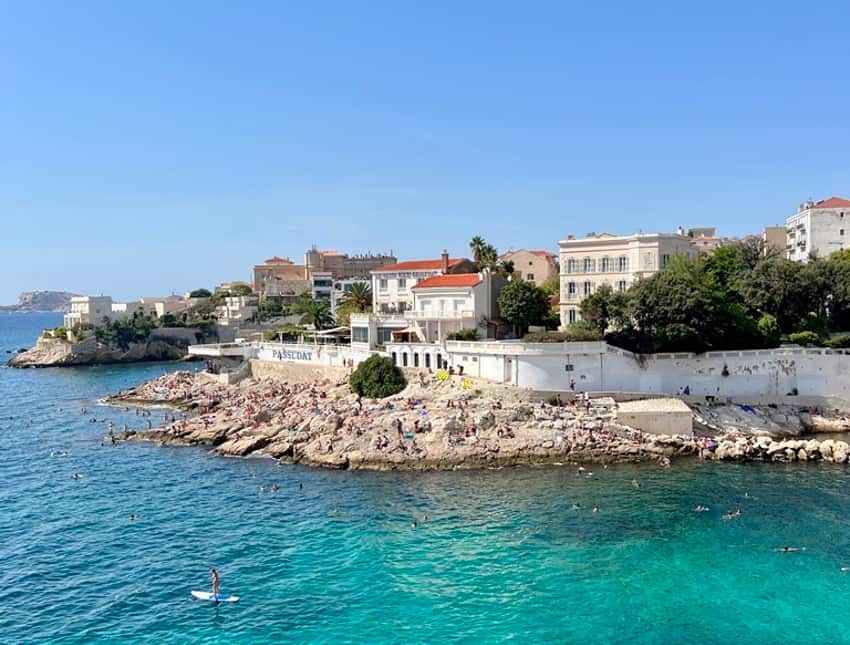
Marseille itself proved to be an excellent location for our gathering. Our conference was held at the NH Collection Hotel, a Haussmannian-style building in the La Joliette district. The venue felt equal parts historic and modern, and the bustling corner it sits on typifies the energetic rhythm of the city. A short walk from the Old Port, or Vieux-Port, our setting in one of France’s most colorful port cities was memorable.

Excellent babysitters and simultaneous interpreters made the conference accessible to more families. Both childcare and translation are essential at CHI family conferences, and the skilled professionals allowed parents and children to participate more fully in the weekend.

During the conference, I told a story from another journey I took to the South of France just a few months earlier that crystallized something about the hyperinsulinism journey, and I want to share it with you.
Until this year, I had not visited the region in almost 40 years; suddenly, in 2026, I found myself there twice. That unexpected return would eventually give me a new way to think about the experiences families brought with them to Marseille.
That first trip, in late May, was for the wedding of a friend, held amid the region’s famous lavender fields. There was only one problem: we would arrive about two and a half weeks before lavender season and miss it. I was initially very disappointed. Yet as we explored the area—the Provençal countryside, the kind people who live there, rolling hills with the Alps in the distance, centuries-old stone villages, beautiful work by local artisans, and exquisite fruits, vegetables, food and wine—my disappointment began to fade. The region had already given me so much more than I expected. It was more than enough.
On our first day of sightseeing (I was accompanied on this adventure by my husband, daughter, and her husband), we drove up Mont Ventoux, one of the South of France’s most iconic cycling climbs and part of the Tour de France. I was uneasy with the height and relieved when we began our descent toward the Gorges de la Nesque, a spectacular canyon with marvelous views. The weather was perfect for open windows, and fresh air streamed into the car. Then, all at once, the four of us thought and at least one of us said, “What is that incredible scent?” It suggested jasmine and rose, yet it was neither. Looking across the countryside, I saw only curious spiky stalks covered with little yellow flowers on both sides of the road. “Stop the car!” I demanded. The fragrance—those enchanting whiffs—was indeed coming from the yellow blooms. My iPhone identified the plant as “Spanish Broom.” Later, my French friend, the mother of the bride, told me it is called Genêt in France. The wedding site was filled with it, too, and its glorious fragrance enveloped the wedding party and guests throughout the ceremony and the hours-long reception.

What began as a disappointment, missing Lavender season, transformed into a new discovery of something equally special, the unique Genêt plant and its fragrance. Upon further research I learned that while the plant grows in the wild and spreads quite easily, the process of extracting the divine scent from the flowers is complicated and costly — and the perfume that is extracted from the flowers is expensive and rare.
My initial disappointment with missing the Lavender and then falling in love with Genêt seemed like a perfect metaphor for having a child with hyperinsulinism, and even the work that clinicians and researchers are dedicated to, improving the lives of people with a rare condition. First, there is the huge disappointment of having a child with hyperinsulinism that is full of trauma for the newly born baby while taking over family life. And then we fall in love with our children with HI, learn to manage even if the care is complex and time-consuming, and realize the condition in no way defines them. We discover Genêt instead of Lavender.
And to continue with this metaphor, at the family conferences, I love discovering the unique perspectives and gifts of each and every HI family I meet, while learning about the clinical and research work. All of this dedication in some way mirrors the effort and determination of extracting the divine scent from the Genêt plant.
